Hi today i will tell you about my holy city Mecca
Early history

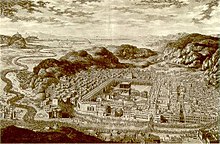
1787 Turkish map of the Masjid al-Haram and related religious sites (Jabal al-Nour)
Islamic tradition attributes the beginning of Mecca to
Ishmael's descendants. Many Muslims point to the Old Testament chapter Psalm 84:3–6 and a mention of a pilgrimage at the Valley of Baca, that Muslims see as referring to the mentioning of Mecca as Bakkah in Qur'an Surah 3:96. Also the Greek historian
Diodorus Siculus who lived between 60 BCE and 30 BCE writes about the isolated region of Arabia in his work
Bibliotheca historica
describing a holy shrine that Muslims see as referring to the Kaaba at
Mecca "And a temple has been set-up there, which is very holy and
exceedingly revered by all Arabians".
Ptolemy may have called the city "Macoraba", though this identification is controversial.
Mecca was also mentioned in the
Samaritan literature, in the Book of the "Secrets of Moses" (Asatir) which claimed that Mecca was built by
Ishmael and his eldest son
Nebaioth The Secrets of Moses” or Asatir book was suggested by some opinion to have been written in 10th century.,
while another opinion suggests that it was written no later than the second half of the 3rd century BC.
Some time in the 5th century CE, the Kaaba was a place of worship for the deities of
Arabia's pagan tribes. Mecca's most important pagan deity was
Hubal, which had been placed there by the ruling
Quraysh tribe
and remained until the 7th century CE.
In the 5th century, the Quraysh took control of Mecca, and became
skilled merchants and traders. In the 6th century they joined the
lucrative
spice trade as well, since battles in other parts of the world were causing trade routes to divert from the dangerous sea routes to the more secure overland routes. The
Byzantine Empire had previously controlled the
Red Sea, but
piracy had been on the increase. Another previous route that ran through the
Persian Gulf via the
Tigris and
Euphrates rivers, was also being threatened by exploitations from the
Sassanid Empire, as well as being disrupted by the
Lakhmids, the
Ghassanids, and the
Roman–Persian Wars. Mecca's prominence as a trading center also surpassed the cities of
Petra and
Palmyra.
The Sassanids however did not always pose a threat to Mecca as in 575
CE they actually protected the Arabian city from invasion of the Kingdom
of Axum, led by its Christian leader
Abraha. The tribes of the southern Arabia, asked the Persian king
Khosrau I
for aid, in response to which he came south to Arabia with both
foot-soldiers and a fleet of ships into Mecca. The Persian intervention
prevented Christianity from spreading eastward into Arabia, and Mecca
and the Islamic prophet Muhammad who was at the time a six year boy in
the Quraysh tribe "would not grow up under the cross."
By the middle of the 6th century, there were three major settlements in northern
Arabia,
all along the south-western coast that borders the Red Sea, in a
habitable region between the sea and the great mountains to the east.
Although the area around Mecca was completely barren, it was the
wealthiest of the three settlements with abundant water via the renowned
Zamzam Well and a position at the crossroads of major
caravan routes.
The harsh conditions and terrain of the Arabian peninsula meant a near-constant state of conflict between the
local tribes,
but once a year they would declare a truce and converge upon Mecca in
an annual pilgrimage. Up to the 7th century, this journey was intended
for religious reasons by the pagan Arabs to pay homage to their shrine,
and to drink from the Zamzam Well. However, it was also the time each
year that disputes would be arbitrated, debts would be resolved, and
trading would occur at Meccan fairs. These annual events gave the tribes
a sense of common identity and made Mecca an important focus for the
peninsula.
Camel caravans, said to have first been used by Muhammad's
great-grandfather, were a major part of Mecca's bustling economy.
Alliances were struck between the merchants in Mecca and the local
nomadic tribes, who would bring goods – leather, livestock, and metals
mined in the local mountains – to Mecca to be loaded on the caravans and
carried to cities in
Syria and Iraq.
Historical accounts also provide some indication that goods from other
continents may also have flowed through Mecca. Goods from Africa and the
Far East passed through en route to Syria including spices, leather,
medicine, cloth, and slaves; in return Mecca received money, weapons,
cereals and wine, which in turn were distributed throughout Arabia. The
Meccans signed treaties with both the Byzantines and the
Bedouins,
and negotiated safe passages for caravans, giving them water and
pasture rights. Mecca became the center of a loose confederation of
client tribes, which included those of the
Banu Tamim. Other regional powers such as the
Abyssinian, Ghassan, and Lakhm were in decline leaving Meccan trade to be the primary binding force in Arabia in the late 6th century.
Thamudic Inscriptions
Some
Thamudic inscription that were discovered in south Jordan contained names of some individuals such as "
Abd Mekkat" which means in English "Servant of Mecca".
There were also some other inscription that contained names such as "
Makky" which means "The Meccan", but Professor "Jawwad Ali" from the
University of Baghdad stated that there's also a probability of a tribe named "Mecca".
Tradition
According to Islamic tradition, the history of Mecca goes back to
Abraham (Ibrahim) who built the Kaaba with the help of his elder son Ishmael in around 2000 BCE when the inhabitants of what was then known as
Bakkah had fallen away from the original
monotheism of Abraham through the influence of the
Amalekites.
Muhammad and conquest of Mecca
Muhammad was born in Mecca in 570, and thus Islam has been
inextricably linked with it ever since. He was born in a minor faction,
the
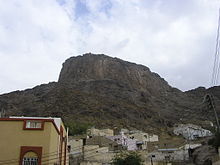
Hashemites, of the ruling Quraysh tribe. It was in Mecca, in the nearby mountain cave of
Hira on
Jabal al-Nour, that, according to Islamic tradition, Muhammad began receiving divine
revelations from God through the
Archangel Gabriel in 610 AD, and advocated his form of
Abrahamic monotheism against Meccan paganism. After enduring persecution from the pagan tribes for 13 years, Muhammad emigrated (see
Hijra) in 622 with his companions, the
Muhajirun, to Yathrib (later called Medina). The conflict between the Quraysh and the Muslims, however, continued: The two fought in the
Battle of Badr, where the Muslims defeated the Quraysh outside Medina; while the
Battle of Uhud ended indecisively. Overall, Meccan efforts to annihilate Islam failed and proved to be costly and unsuccessful. During the
Battle of the Trench in 627, the combined armies of Arabia were unable to defeat Muhammad's forces .
In 628, Muhammad and his followers wanted to enter Mecca for
pilgrimage, but were blocked by the Quraysh. Subsequently, Muslims and
Meccans entered into the
Treaty of Hudaybiyyah,
whereby the Quraysh promised to cease fighting Muslims and promised
that Muslims would be allowed into the city to perform the pilgrimage
the following year. It was meant to be a ceasefire for 10 years.
However, just two years later, the Quraysh violated the truce by
slaughtering a group of Muslims and their allies. Muhammad and his
companions, now 10,000 strong, marched into Mecca. However, instead of
continuing their fight, the city of Mecca surrendered to Muhammad, who
declared peace and amnesty for its inhabitants. The pagan imagery was
destroyed by Muhammad's followers and the location Islamized and rededicated to the worship of God. Mecca was declared as the
holiest site in Islam ordaining it as the center of Muslim pilgrimage, one of the faith's
Five Pillars. Then, Muhammad returned to Medina, after assigning
Akib ibn Usaid as governor of the city. His other activities in Arabia led to the unification of the peninsula.
Muhammad died in 632, but with the sense of unity that he had passed on to his
Ummah
(Islamic nation), Islam began a rapid expansion, and within the next
few hundred years stretched from North Africa into Asia and parts of
Europe. As the Islamic Empire grew, Mecca continued to attract pilgrims from all across the
Muslim world and beyond, as Muslims came to perform the annual Hajj pilgrimage.
Mecca also attracted a year-round population of scholars, pious
Muslims who wished to live close to the Kaaba, and local inhabitants who
served the pilgrims. Due to the difficulty and expense of the Hajj,
pilgrims arrived by boat at Jeddah, and came overland, or joined the
annual caravans from Syria or Iraq.
Medieval and pre-modern times
Mecca was never the capital of any of the
Islamic states but Muslim rulers did contribute to its upkeep. During the reigns of Umar (634–44 CE) and
Uthman ibn Affan (644–56) concerns of flooding caused the caliphs to bring in
Christian engineers to build barrages in the low-lying quarters and construct dykes and embankments to protect the area round the Kaaba.
Muhammad's migration to Medina shifted the focus away from Mecca,
this focus moved still more when Ali, the fourth caliph took power
choosing
Kufa as his capital. The Umayyad Caliphate moved the capital to
Damascus in Syria and the
Abbasid Caliphate to
Baghdad,
in modern-day Iraq, which remained the center of the Islamic Empire for
nearly 500 years. Mecca re-entered Islamic political history during the
Second Islamic Civil War, when it was held by
Abd Allah ibn al-Zubayr, an early Muslim who opposed the Umayyad caliphs. The city was twice besieged by the Umayyads, in
683 and
692.
For some time thereafter the city figured little in politics, remaining
a city of devotion and scholarship governed by the Hashemite
Sharifs.
In 930, Mecca was attacked and sacked by
Qarmatians, a millenarian Ismaili Muslim sect led by
Abū-Tāhir Al-Jannābī and centered in eastern Arabia.
The
Black Death pandemic hit Mecca in 1349.
In 1517, the Sharif, Barakat bin Muhammed, acknowledged the supremacy of the
Ottoman Caliph but retained a great degree of local autonomy.
In 1803 the city was captured by the
First Saudi State,
which held Mecca until 1813. This was a massive blow to the prestige of
the (Turkish) Ottoman Empire, which had exercised sovereignty over the
holy city since 1517. The Ottomans assigned the task of bringing Mecca
back under Ottoman control to their powerful Khedive (viceroy) of Egypt,
Muhammad Ali Pasha. Muhammad Ali Pasha successfully returned Mecca to Ottoman control
in 1813.
In 1818, followers of the
Salafi juristic school were again defeated, but some of the Al Saud clan survived and founded the Second Saudi State that lasted until 1891 and lead on to the present country of Saudi Arabia.

Another view of Mecca in 1910
Mecca was regularly afflicted with
cholera epidemics.27 epidemics were recorded during pilgrimages from the 1831 to 1930.
More than 20,000 pilgrims died of cholera during the 1907–08 hajj.
Revolt of Sharif of Mecca
In
World War I,
the Ottoman Empire was at war with Britain and its allies, having sided
with Germany. It had successfully repulsed an attack on Istanbul in the
Gallipoli Campaign and on Baghdad in the
Siege of Kut. The British agent
T E Lawrence conspired with the Ottoman governor
Syed Hussain bin Ali,
the Sharif of Mecca. Hussein bin Ali revolted against the Ottoman
Empire from Mecca, and it was the first city captured by his forces in
the
Battle of Mecca (1916). Sharif's revolt proved a turning point of the war on the eastern front. Sharif Hussein declared a new state, the
Kingdom of Hejaz, and declared Mecca as the capital of the new kingdom.
Saudi Arabia
Following the
Battle of Mecca (1924), the Sharif of Mecca was overthrown by the Saud family, and Mecca was incorporated into Saudi Arabia.
Under Saudi rule, much of the historic city has been demolished as a result of construction programs –
see below.
On November 20, 1979 two hundred armed
Islamist dissidents led by Saudi preacher Juhayman al-Otaibi seized the Grand Mosque. They claimed that the Saudi royal family no longer represented pure Islam and that the
Masjid al-Haram
(The Sacred Mosque) and the Kaaba, must be held by those of true faith.
The rebels seized tens of thousands of pilgrims as hostages and
barricaded themselves in the
mosque. The siege lasted two weeks, and resulted in several hundred deaths and significant damage to the shrine, especially the
Safa-Marwa gallery.
Pakistani forces
carried out the final assault; they were assisted with weapons,
logistics and planning by an elite team of French commandos from
The French GIGN commando unit.